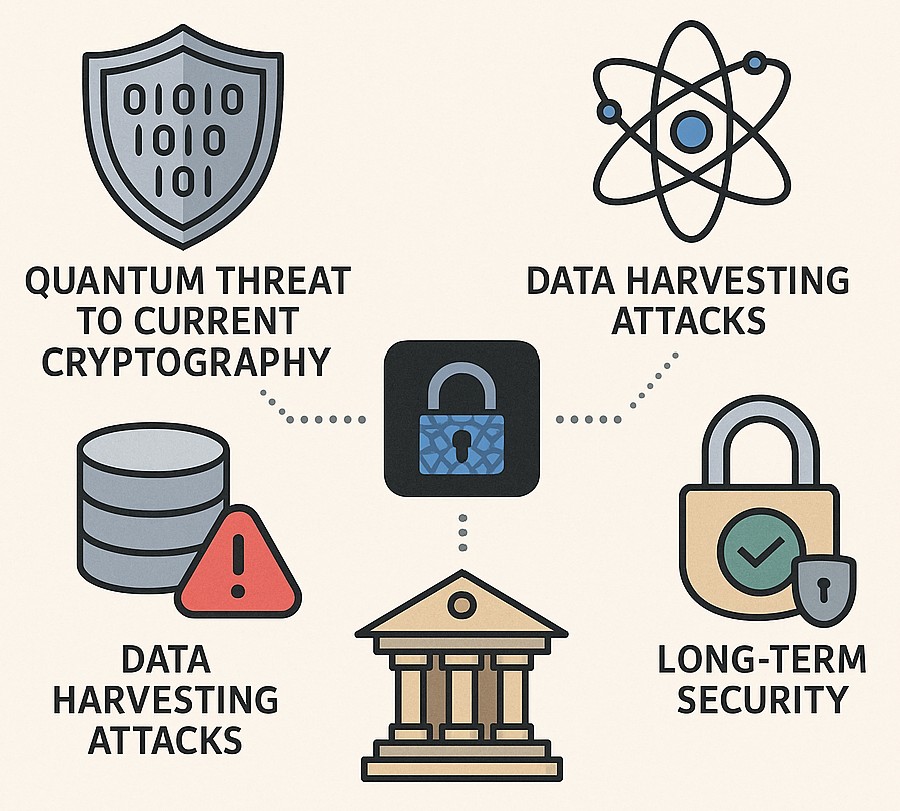
As we continue to rely on digital technologies to store and transmit sensitive information, the need for robust security measures has never been more pressing. The advent of quantum computing has introduced a new era of computational power, but it also poses a significant threat to our current encryption methods. This is where post-quantum cryptography (PQC) comes in – a new generation of cryptographic techniques designed to withstand the might of quantum computers. In this blog post, we'll delve into the world of PQC, exploring its importance, key concepts, and real-world applications.
Introduction to Post-Quantum Cryptography
Classical cryptography relies on complex mathematical problems, such as factoring large numbers or computing discrete logarithms, to secure online transactions and communication. However, quantum computers can solve these problems much faster than classical computers, rendering our current encryption methods vulnerable to attack. PQC aims to address this issue by developing cryptographic algorithms that are resistant to quantum computing attacks.
Key Concepts in PQC
Some of the key concepts in PQC include:
- Quantum-resistant algorithms: These are algorithms that are designed to be secure against quantum computing attacks, such as lattice-based cryptography, code-based cryptography, and multivariate cryptography.
- Hash-based signatures: These are digital signatures that use hash functions to authenticate messages, making them more secure against quantum attacks.
- Key exchange protocols: These are protocols that enable two parties to establish a shared secret key over an insecure channel, without relying on classical cryptography.
Why is PQC Important?
The importance of PQC cannot be overstated. As quantum computers become more powerful and widely available, the risk of quantum attacks on our current encryption methods grows. If a large-scale quantum computer were to be built, it could potentially break many of the encryption algorithms currently in use, compromising the security of online transactions, communication, and data storage. PQC provides a solution to this problem, ensuring that our online security remains intact even in the face of quantum computing threats.
Real-World Applications of PQC
PQC has a wide range of real-world applications, including:
- Secure online transactions: PQC can be used to secure online transactions, such as banking and e-commerce, by providing quantum-resistant encryption methods.
- Communication security: PQC can be used to secure communication networks, such as email and messaging apps, by providing quantum-resistant encryption methods.
- Data storage security: PQC can be used to secure data storage, such as cloud storage and databases, by providing quantum-resistant encryption methods.
Conclusion and Key Takeaways
In conclusion, post-quantum cryptography is a critical component of online security in the quantum computing era. By developing and deploying PQC algorithms and protocols, we can ensure that our online transactions, communication, and data storage remain secure against quantum attacks. The key takeaways from this blog post are:
- PQC is essential for securing online data and transactions against quantum computing threats.
- PQC algorithms and protocols are being developed to replace classical cryptography methods.
- PQC has a wide range of real-world applications, including secure online transactions, communication security, and data storage security.


