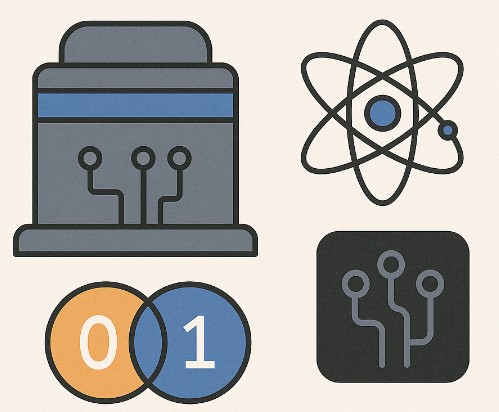
Introduction to Quantum Computing
Quantum computing is a revolutionary technology that uses the principles of quantum mechanics to perform calculations and operations on data. It has the potential to solve complex problems that are currently unsolvable with traditional computers, and its applications are vast and varied. In this blog post, we will introduce the basics of quantum computing, its history, and its potential applications.
What is Quantum Computing?
Quantum computing is a type of computing that uses quantum-mechanical phenomena, such as superposition and entanglement, to perform operations on data. Unlike classical computers, which use bits to store and process information, quantum computers use quantum bits or qubits. Qubits are unique because they can exist in multiple states simultaneously, allowing for much faster processing of complex calculations.
Key Concepts in Quantum Computing
There are several key concepts that are essential to understanding quantum computing. These include:
- Superposition: the ability of a qubit to exist in multiple states simultaneously
- Entanglement: the ability of qubits to become connected and affect each other's states
- Quantum measurement: the process of observing a qubit's state, which can cause it to change
History of Quantum Computing
The concept of quantum computing was first proposed in the 1980s by physicists such as David Deutsch and Richard Feynman. However, it wasn't until the 1990s that the first quantum algorithms were developed, including Shor's algorithm for factorization and Grover's algorithm for search. Since then, there has been significant investment and research in the field, with companies such as Google, Microsoft, and IBM developing their own quantum computing platforms.
Current State of Quantum Computing
Today, quantum computing is still in its early stages, but there have been significant advancements in recent years. Quantum computers are being used to simulate complex systems, optimize processes, and even break certain types of encryption. However, there are still many challenges to overcome, including the development of more reliable and scalable quantum computing hardware.
Applications of Quantum Computing
Quantum computing has the potential to revolutionize a wide range of industries, including:
- Cryptography: quantum computers can break certain types of encryption, but they can also be used to create unbreakable encryption methods
- Optimization: quantum computers can be used to optimize complex systems, such as logistics and supply chains
- Materials science: quantum computers can be used to simulate the behavior of materials at the molecular level
- Artificial intelligence: quantum computers can be used to speed up machine learning algorithms and improve their accuracy
Case Studies
There are already several examples of quantum computing being used in real-world applications. For example, Google has used quantum computing to simulate the behavior of molecules, which could lead to breakthroughs in fields such as medicine and materials science. IBM has also used quantum computing to optimize complex systems, such as traffic flow and logistics.
Conclusion
In conclusion, quantum computing is a revolutionary technology that has the potential to solve complex problems and revolutionize industries. While it is still in its early stages, there have been significant advancements in recent years, and it is an exciting time for researchers and developers in the field. As quantum computing continues to evolve, we can expect to see new and innovative applications emerge.
The key takeaways from this introduction to quantum computing are:
- Quantum computing uses the principles of quantum mechanics to perform calculations and operations on data
- Quantum computers have the potential to solve complex problems that are currently unsolvable with traditional computers
- Quantum computing has a wide range of potential applications, including cryptography, optimization, materials science, and artificial intelligence


